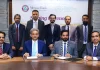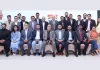
The Overseas Investors Chamber of Commerce and Industry (OICCI), the collective body of top 200 foreign investors, hosted Dr. Najeeb Memon, Director General, Tax Policy Office (TPO), Finance Division, on Thursday for an interactive session with OICCI members, aimed at enabling constructive engagement on tax policy challenges and reform priorities impacting Pakistan’s investment climate.
During the session, OICCI members shared overarching business and investment-related tax concerns, deliberately focusing on systemic and structural issues rather than operational or case-specific matters. The dialogue reflected evolving investor sentiment, with members acknowledging progress on macroeconomic stability while emphasizing the need for predictability, consistency, and transparency in tax policy and implementation.
Members highlighted key considerations for the Tax Policy Board, including the importance of a stable and predictable tax framework, reduction in policy uncertainty, and alignment between tax policy intent and on-ground implementation. Persistent challenges such as prolonged delays in tax refund settlements, frequent changes in tax measures, and the cumulative cost of doing business were identified as critical areas requiring policy-level intervention. OICCI also highlighted the need to strengthen institutional coordination, simplify tax procedures, and adopt a consultative approach in future tax reforms to restore investor confidence and support sustainable foreign direct investment (FDI) inflows.
Speaking at the session, Dr. Najeeb Memon, Director General, Tax Policy Office, appreciated the quality of engagement with OICCI members and assured participants that stakeholder input remains central to effective tax policymaking.
“Engagements such as this with key economic stakeholders in the country help the Government of Pakistan understand investor perspectives at a strategic level. The Tax Policy Office values evidence-based input from OICCI and its members, which will be carefully considered as we work towards a more coherent, predictable, and growth-oriented tax policy framework,” he said.
Yousaf Hussain, President OICCI, said that the real value of the proposed tax policy reforms lies in how these are translated into improved predictability, consistency, and meaningful engagement with stakeholders.
“Businesses plan over long horizons, and frequent changes, unclear interpretations, and retrospective measures undermine confidence and raise the cost of capital. A consultative, well-signalled, medium-term tax policy framework focused on broadening the tax base, simplifying compliance, and aligning taxation with national priorities such as investment, exports, and job creation would significantly improve investor sentiment and support sustainable economic growth,” he said.
M. Abdul Aleem, OICCI Secretary General, emphasized the importance of tax reforms to sustain investor confidence. “Foreign investors are increasingly looking beyond short-term stabilization towards structural reforms. A predictable tax regime, timely settlement of pending tax refunds, and consistent implementation of policies are essential to improving Pakistan’s competitiveness and positioning it as an attractive investment destination,” he noted.
The session concluded with both sides agreeing to maintain regular engagement to ensure that investor perspectives continue to help facilitate tax policy discussions, with the shared objective of improving predictability, consistency, and investor confidence in Pakistan’s tax framework.